
Lifecycle of Nested Components
In frontend development, componentization is a crucial concept. Whether in Vue or React, there are many scenarios where nested components are used. For example:
<LayoutComponent>
    <ContainerComponent>
        <ActualContent />
    </ContainerComponent>
</LayoutComponent>
Here, we have three levels of nested components. The lifecycle execution order of nested components differs between Vue and React. This article provides a detailed explanation of the lifecycle order in these two frameworks.
1. Vue
1.1 Creation Phase
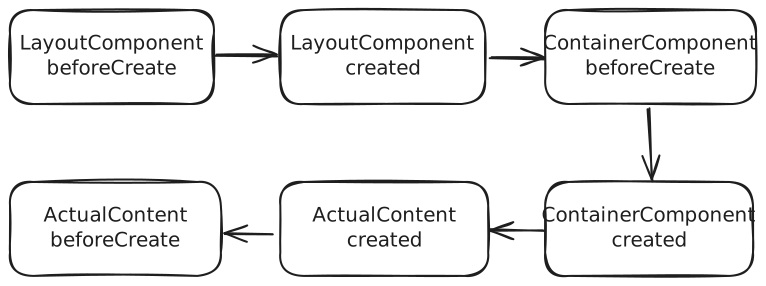
During the creation phase, Vue’s lifecycle hooks execute from the outer components to the inner ones. This is because the parent component needs to initialize first to provide the necessary data and context to the child components. Vue’s data flow moves from top to bottom, meaning the parent component’s state significantly influences the rendering of child components.
1.2 Mounting Phase
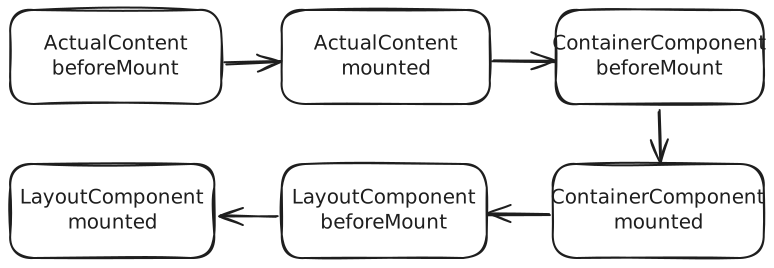
During the mounting phase, Vue’s lifecycle hooks execute from the inner components to the outer ones. Child components must finish mounting first to ensure the parent component has access to the complete DOM structure. This guarantees that the mounted hook of the parent component can safely operate on the DOM of its child components.
1.3 Summary
In Vue, the creation phase progresses from the outer components to the inner ones, while the mounting phase progresses from the inner components to the outer ones. This design ensures safe data transmission and DOM manipulation.
2. React
2.1 Rendering Phase
In React, components are rendered from the outer components to the inner ones. React’s one-way data flow means that the parent component’s state determines the rendering of its child components. Therefore, the rendering content of the parent component must be determined first before continuing to render the child components.

2.2 Side Effect Phase
In React, the execution order of useEffect is from the inner components to the outer ones. React ensures that the useEffect of child components is completed before executing the useEffect of the parent components. This order helps avoid conflicts when the parent component manipulates the state or DOM of its child components. Moreover, this order aligns with the cleanup sequence during component unmounting, where child components are cleaned up before parent components.

2.3 Summary
In React, the rendering phase progresses from the outer components to the inner ones, while the execution order of useEffect progresses from the inner components to the outer ones. This design ensures the one-way flow of data and the correct handling of side effects.
3. Conclusion
While Vue and React differ in their specific lifecycle implementations, both follow the principle of “initializing data from the outer components to the inner components” and “manipulating the DOM from the inner components to the outer components.” This pattern ensures the safety and consistency of data transmission and operations between nested components.
By understanding these lifecycle sequences, developers can better control component behavior and avoid potential issues. In actual development, it is crucial to choose the appropriate framework and lifecycle hooks based on specific requirements.